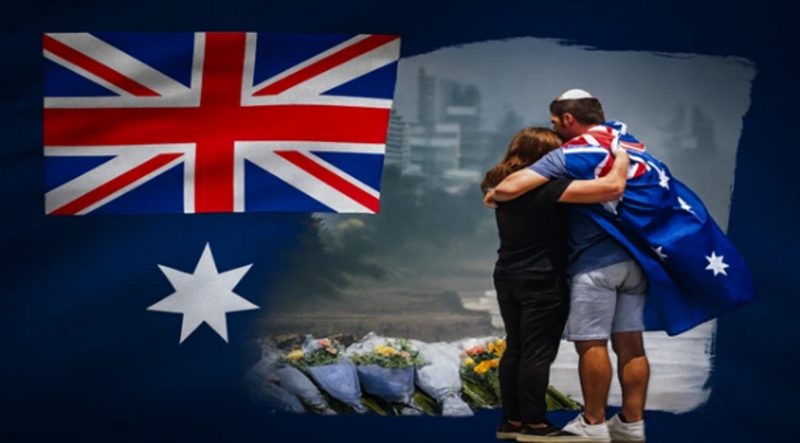
Friends and families mourn the death of the individuals of 2025 Australia's Bondi Beach Shootings. Image credits: Nelly | Kencrave
An analysis of the immediate failures, the looming gun law reforms, and the Australia's confrontation with rising antisemitism.
On December 14, 2025, Australia was shaken by a mass shooting at Sydney’s Bondi Beach during a Hanukkah celebration. Two gunmen, Sajid Akram (50) and his son Naveed Akram (24), opened fire on a crowd of nearly 1,000 people, leaving 15 dead and more than 40 injured (USA today). This marked the worst mass shooting in Australia since 1996 and triggered nationwide debates on antisemitism, counterterrorism, and gun control.
Bondi Beach Massacre 2025: Security Crisis and Terrorism Analysis
The gunmen opened fire from an overpass while shouting extremist slogans. One of the attackers was killed by police, while the other was critically injured.
Among the victims were children and the elderly, with vigils held at Bondi Pavilion to honor the lives lost.
Australian Government Response to Bondi Beach Shooting
Prime Minister Anthony Albanese condemned the attack as an “act of evil antisemitism, terrorism.” Over 300 police officers were deployed to Sydney, and urgent discussions on tougher gun laws have been initiated.
The attack has also intensified national conversations about rising antisemitism in Australia, particularly amid recent extremist rhetoric and hate crimes.
Bar chart comparing fatalities and injuries in major Australian mass shootings from Port Arthur, Monash and Bondi Beach (1996 - 2025).
Key Insights from the graph:
Port Arthur Remains the Deadliest: The 1996 Port Arthur massacre remains the deadliest incident shown, with 35 fatalities. It is the only event on the chart where the number of deaths exceeds the number of injuries.
Bondi Beach (2025) Recorded the Highest Injuries: While it had fewer fatalities than Port Arthur, the 2025 Bondi Beach incident resulted in the highest number of injuries recorded among these major events (40 injuries).
Significant Total Casualty Comparison: The 2025 Bondi Beach incident is the most significant mass casualty event in this comparison since 1996.
Long Intervals Between Major Events: The chart illustrates a significant 23-year gap between the 2002 Monash University shooting and the 2025 Bondi Beach incident, highlighting that such large-scale "major" incidents have historically been rare in Australia.
Scale of the Monash Incident: Compared to the other two, the 2002 Monash incident was much smaller in scale, resulting in 7 total casualties (2 deaths, 5 injuries), making it a significant but much lower-impact outlier on this specific list of major shootings.
The Bondi Beach shooting is now considered the deadliest mass shooting in Australia in nearly three decades.
Trends in Australian Mass Shootings
Over time, Australian mass shootings have shown a shift toward higher injury counts relative to fatalities, potentially reflecting changing attack tactics.
Antisemitism is on the rise nationwide, and this attack has renewed calls for stronger measures to combat hate crimes and extremist violence.
Bar chart ranking Global Antisemitic Attitude Index 2025: Kuwait & West Bank Gaza highest at 97%, Indonesia 96%, global average 46%, lowest Sweden 5%.
Key Takeaways From Global Antisematic Attitude Index Chart
Highest Index Levels:The top of the list is dominated by the Middle East and North Africa (MENA) region, with the West Bank & Gaza, Kuwait, and Indonesia recording levels above 95%.
Global Benchmark: Australia’s score of 20% is significantly lower than the Global Average (46%), but it remains more than double that of other Western nations like the UK (9%), USA (9%), and Sweden (5%).
Australia's Trajectory:While Australia ranks relatively low in terms of general population attitudes compared to the global scale, the 317% increase in reported incidents over the last year (following events like the 2025 Bondi Beach tragedy) indicates a sharp rise in active extremism despite a lower general index score
Global Context: How Australia Compares Internationally
Mass Shooting Frequency Comparison:
Australia: 1 major event per decade (average since Port Arthur).
United States: 600+ mass shootings annually (2020-2024 average).
Canada: 2-3 significant events per decade.
United Kingdom: 1 major event every 15 years.
New Zealand: Christchurch 2019 prompted major reforms.
Policy Response Comparison:
Australia (1996): Rapid, comprehensive reform post-Port Arthur.
New Zealand (2019): 72-hour response with firearm buyback.
United Kingdom (1996): Strict handgun bans after Dunblane.
Canada (2020): Assault weapon ban after Nova Scotia attacks.
United States: Incremental state-level changes, no federal consensus.
Economic and Social Impact of the Bondi Beach Massacre
1. National Security and Counterterrorism Concerns. The massacre has reignited debates over gun laws, antisemitism, and counterterrorism (ABC News). Australia may face heightened scrutiny of its security framework and pressure to tighten firearms regulation.
2. Social Impact and Public Fear. The attack has heightened fear among Sydney residents and businesses, increased reputational risk, and intensified concerns within Jewish communities nationwide.
3. Consumer Confidence and Economic Sentiment. Consumer sentiment fell by 9% in December 2025, driven by inflation concerns and compounded by security fears following the Bondi Beach attack.
Policy Recommendations: Preventing Future Attacks
Immediate Actions (0-6 Months):
National Security Review: Independent inquiry into intelligence failures.
Firearm Registry Overhaul: Real-time tracking system implementation.
Public Event Guidelines: Mandatory security assessments for gatherings >500 people.
Hate Crime Legislation: Strengthened penalties and reporting requirements.
Medium-Term Reforms (6-24 Months):
Community Policing Expansion: 500 additional officers for community engagement.
Mental Health Integration: Mandatory reporting to firearm registries.
Education Curriculum: National program on extremism prevention.
International Cooperation: Enhanced intelligence sharing with Five Eyes partners.
Long-Term Strategy (2-5 Years):
Technology Investment: AI monitoring of online extremist content.
Social Cohesion Programs: $100 million annual funding for community integration.
Research Institute: Australian Centre for Extremism Studies establishment.
Legislative Review: Comprehensive review of all counter-terrorism laws.
The Road Ahead After the Bondi Beach Shooting: Australia's Security Crossroads
The Bondi Beach Massacre of 2025 represents a critical inflection point for Australian security policy, social cohesion, and counter-terrorism strategy. The attack exposes vulnerabilities in intelligence sharing, public event security, and online radicalization monitoring.
Three critical lessons emerge:
Intelligence Reform Needed: Australia's security apparatus must adapt to evolving domestic extremism threats beyond traditional categories.
Firearm Regulation Gaps: The 1996 Port Arthur reforms require updating for digital age challenges including online sales and weapon modification.
Social Cohesion Investment: Addressing root causes of radicalization requires sustained investment in community integration and counter-extremism education.
Bottom Line
The response to the Bondi Beach Shooting issue will test Australia's ability to balance security imperatives with civil liberties, rapid response with thoughtful reform, and immediate trauma with long-term healing. The decisions made in 2025-2026 will shape Australian security policy for the coming generation.
Bondi Beach Massacre 2025: FAQs on Australia's Deadliest Shooting Since Port Arthur
1. What happened at Bondi Beach in December 2025?
On December 14, 2025, during a Hanukkah celebration at Sydney's Bondi Beach, two gunmen, Sajid Akram (50) and his son Naveed (24), opened fire from an overpass, killing 15 people and injuring over 40. It was Australia's deadliest mass shooting since the 1996 Port Arthur massacre and was declared an act of antisemitic terrorism by Prime Minister Anthony Albanese.
2. What weapons were used in the Bondi Beach attack and were they legal?
The attackers used illegally modified semi-automatic rifles obtained through black market channels, exploiting a significant loophole in Australia's National Firearms Agreement established after Port Arthur.
3. How is Australia changing gun laws after the Bondi Beach shooting?
The attack has prompted urgent parliamentary debate on four key reforms: A real-time national firearms registry (currently 24-hour delay); Tighter border controls on firearm parts; Increased penalties for illegal modifications (up to 20 years imprisonment) and Mandatory mental health reporting to licensing authorities. measures aimed at closing gaps exposed by the attack.
4. Was the Bondi Beach attack related to rising antisemitism in Australia?
Yes. The attackers targeted a Jewish celebration while shouting extremist slogans, amid documented rising antisemitism, a 60% increase in incidents reported in 2024. The attack has triggered a $25 million security package for Jewish communities, mandatory Holocaust education in schools, and enhanced hate crime legislation.
5. How does the Bondi Beach casualty count compare to Port Arthur?
While Port Arthur (1996) had higher fatalities (35 vs. 15), Bondi 2025 recorded Australia's highest injury count (40+) in any mass shooting. This reflects both changes in attack methodology (urban crowded space vs. isolated tourist site) and improvements in emergency medical response that saved lives but left many severely injured.
.png)
.png)