
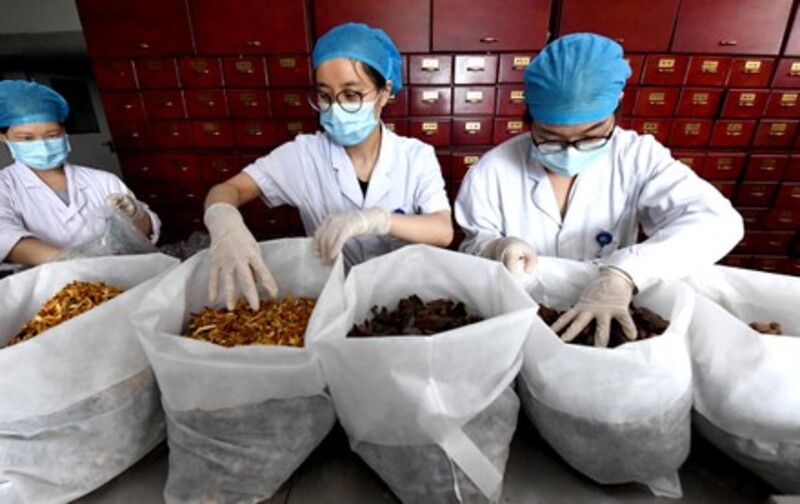
Survey identifies over 18,000 TCM drug material varieties in China. Photo: Xinhua
Asia
Executive Summary: A convergence of Traditional and Digital Health in Asia
Asia is creating a new healthcare model by merging 3,000-year-old traditional medicine (TCM, Ayurveda) with artificial intelligence and digital health. With $5.8B invested in China and $2.64B in India, and 54% of all funding now going to AI-driven solutions, the region is proving that ancient wisdom and modern technology can coexist. Recent successes like a 2025 stroke trial showing herbal formula effectiveness and a Cambodia clinic treating 34,000 patients with 67% follow-up demonstrate real-world potential. The path forward requires hybrid regulations, interoperable health records, cross-trained practitioners, and insurance coverage. Asia isn't just adopting Western digital health, it's redefining healthcare as personalized, preventive, and accessible to all.
Origins of Traditional Chinese Medicine (TCM) and the Foundations of Traditional Asian Medicine
Asia is creating a new healthcare model by merging 3,000-year-old traditional medicine (TCM, Ayurveda) with artificial intelligence and digital health. With $5.8B invested in China and $2.64B in India, and 54% of all funding now going to AI-driven solutions, the region is proving that ancient wisdom and modern technology can coexist. Recent successes like a 2025 stroke trial showing herbal formula effectiveness and a Cambodia clinic treating 34,000 patients with 67% follow-up demonstrate real-world potential. The path forward requires hybrid regulations, interoperable health records, cross-trained practitioners, and insurance coverage. Asia isn't just adopting Western digital health, it's redefining healthcare as personalized, preventive, and accessible to all.
Origins of Traditional Chinese Medicine (TCM) and the Foundations of Traditional Asian Medicine
The Chinese people created traditional Chinese medicine (TCM) as a system of medical knowledge. The holistic idea of "harmony between man and nature" defines TCM as a practice that includes visible information; cognitive activity from a point of view of both attributes and relationships; natural resources found inside and outside of one's body; as well as the regulation and balance of one's state of health.
The provision of Traditional Asian Medicine, particularly Traditional Chinese Medicine (TCM), began over 3,000 years ago with shamanistic practices and early therapeutic tools like stone acupuncture needles. By the Western Zhou Dynasty (1046–771 BCE), healthcare had evolved into a remarkably sophisticated, state-funded system documented in the Rites of Zhou, featuring specialized physicians whose performance and compensation were tied to patient outcomes.
The foundational "why" of this era was both practical and driven by the holistic belief in achieving harmony between humanity, nature, and the vital energy of Qi. This theoretical framework was solidified between 200 BCE and 200 CE with the creation of canonical texts like The Yellow Emperor's Inner Classic and Shen Nong's Herbal, which explained illness as an imbalance to be corrected through individualized care, diet, and natural substances.
Throughout subsequent centuries, imperial patronage advanced TCM as a matter of statecraft and cultural prestige, with governments commissioning the world's first pharmacopoeias to standardize knowledge. The tradition was further enriched through cross-cultural exchanges along the Silk Road, integrating ideas from Ayurvedic, Greco-Arabic, and Tibetan medicine.
In the 20th century, TCM faced existential threats from modernization movements but was politically reinvented under Maoist China as a source of national pride and an affordable, scalable healthcare solution for rural populations. Today, the "why" has expanded to include scientific validation through AI in healthcare, biotechnology, economic opportunity, and global digital health leadership.
Case Studies: Integration of Traditional Asian Medicine and Digital Health Systems
Cases where Traditional Chinese (Asian) Medicine was adopted, the effectiveness and failures.
Case 1: National TCM Integration Model of China – Digital Health and AI in Traditional Medicine
More than 85% of hospitals in China are integrating TCM, with standardized education, national treatment guidelines, insurance coverage, and government research infrastructure. TCM is used along with conventional treatments, not as an alternative to them.
Successes:
- Show large scale viability of traditional medicine integration into the modern healthcare system.
- Providing insurance coverage eliminates financial barriers and ensures equal access for all patients.
- Government funding has resulted in standardization of education, practice, and research. Serves as a global reference point for countries looking to integrate traditional medicine.
Failures:
- Although China has achieved success domestically, there are no international regulatory harmonization efforts raising questions about compliance with international evidence standards.
- Limited ability to export TCM products and practices; limited ability to gain acceptance of TCM in the international marketplace.
- The integration of TCM has not resolved the epistemological conflict between the holistic nature of TCM and the reductionist approach of modern Western evidence-based health care.
Case 2: Jianpi Fuzheng Formula RCT – Evidence-Based Validation of Traditional Chinese Medicine
In 2025 double-blind randomized placebo-controlled clinical trials were performed for the Jianpi Fuzheng formula (JPFZF) for ischemic stroke patients over 24 weeks.
Successes:
- JPFZF showed lower rates of recurrence of vascular events over time compared to placebo.
- Patients treated with JPFZF had significant improvements in cognition (MoCA score) and reduced anxiety and depression (SAS and SDS).
- The design of this study followed gold standard RCT methods (double blind randomized, placebo controlled registered study) and did not show any significant differences in safety compared to placebo; indicating that JPFZF has a good safety profile.
Failures:
- Lack of multi-center replication.
Case 3: Traditional Medicine and COVID-19 – Global Use of TCM and Ayurveda During the Pandemic
Due to the COVID-19 pandemic, several Southeast Asian countries began using Traditional Medicine in conjunction with conventional medical treatment. Over 78 studies from Traditional Chinese Medicine (TCM), Ayurvedic, Siddha, and Homeopathic were reviewed in a meta-analysis.
Successes:
- TCM showed minor improvements in symptom relief and reduced hospitalization.
- Ayurvedic products (AYUSH 64, Ashwagandha) reduced viral loading faster in some studies.
- Significant acceptance and demand for Traditional Medicine from treated populations.
- Governments actively mobilized Traditional Medicine resources to aid the COVID-19 response within China/India.
Failures:
- Homeopathic medicine showed no treatment effect greater than placebo with no evidence of efficacy.
- Inconsistent safety reporting on TCM among the studies.
- There was a lack of data around severity of cases of COVID-19; therefore, treatment decisions cannot be made without more data.
- Due to the high degree of methodological heterogeneity between studies, valid conclusions about the comparative effectiveness cannot be drawn.
- There was a wide variation in the robustness of the evidence for each system of Traditional Medicine.
Case 4: International TCM Clinic in Cambodia – Cross-Border Digital Health and Traditional Medicine Expansion
In 2022, a Chinese medical team established a TCM clinic at the Cambodia-China Friendship Hospital located in Phnom Penh, Cambodia. The clinic treated approximately 34000 local patients for a year, which included treating patients for COVID-19.
Successes:
- Follow-up rate for this international medical mission is very high at 67%.
- Several former patients have documented successful outcomes, such as a hearing-impaired patient regaining their hearing and a patient.
- Continued patient demand for TCM in Cambodia could lead to a permanent establishment of a TCM clinic between China and Cambodia.
- Highlights potential for acceptance and desire for cross-cultural utilization of TCM.
Failures:
- Evidence is anecdotal and there have been no controlled studies completed.
- This international medical mission was dependent on the support of diplomats and other officials from their respective governments. Therefore, without continued political support, there are concerns surrounding their future sustainability. Cultural translation and acceptance requires continued resources to support the initiative.
Case 5: Ayurveda for Hemiplegia - Systematic Review of Traditional Indian Medicine
A systematic review carried out in 2025, assessed the efficacy of Ayurvedic interventions for hemiplegia (Pakshaghata) by analyzing 30 studies. These studies included randomized controlled trials, non-randomized controlled trials, and pre-post tests.
Successes:
- Ayurvedic interventions are being provided and researched as treatment options for neurological conditions.
- Both practitioners and patients demonstrate significant commitment to their respective cultures and histories surrounding the use of these types of therapies such as Ayurvedic treatment.
Failures:
- The studies included in this review could not provide adequate evidence to make definitive conclusions regarding either efficacy or safety due to the insufficient quality of the individual studies.
With much of the worldwide innovation in digital health emerging from Asia, Asia is becoming the leading global hub for digital health innovation through substantial financial investments in real-time clinical informatics, artificial intelligence (AI) based decision support, and cloud-native digital health platforms. This investment will support the future development of the next generation of digital health services (Smart Health Asia).
Investments in Digital Health among top leading Asia Countries (2016 – 2025)
India
India has seen massive amounts of venture capital (VC) and private equity (PE) investment flowing into the Digital Health, totalling to approximately $10.2 billion Tracxn. The largest amount of funding was raised in 2021 (approximately $2.83 billion), after which there has been an overall decline in funding volume. India’s digital health market size grew from $1.07 billion in 2016 to $2.29 billion by 2021, and it is projected to reach a total size of $6.0 billion by end of 2026.
China
China is characterized by the immense scale of its healthtech market. The wearable medical devices market alone was worth $56 billion in 2016, and it grew 20.1% during that year. Furthermore, healthcare information technology (IT) spending in China is expected to be approximately $12.7 billion (RMB 92.1 billion) by end of 2026. The digital health and wellness market will reach approximately $28.6 billion (RMB 198 billion) by the year end, 2026.
Singapore
The value of the digital health market in Singapore was approximately $1.1 billion in 2021. The government has committed to digital health initiatives through the Smart Nation Programme with a commitment of approximately $1.5 billion, including $100 million of that dedicated to funding AI-based diagnostic systems and approximately $4.5 million for innovation grants.
South Korea
South Korea's market for e-health and telemedicine was estimated to be approximately $3.9 billion in 2021. The government has committed an estimated amount of approximately $250 million to promote digital health initiatives such as telemedicine and e-health technologies (Kenresearch).
Japan
Japan pursues targeted investment funds that support multiple aspects of digital health, including AI, remote care, connected devices and health data.
Comparative Analysis: AI Integration, Telehealth Adoption, and Traditional Medicine Digitalization by Country
2025 cumulative digital health investments in Asia

Key Insights: 2025 cumulative digital health investments in Asia
- China as the market leader: With $5.8B in cumulative investment, China has established itself as the undisputed hub for digital health innovation in Asia. This scale signals strong government backing, robust capital markets, and a mature ecosystem for healthcare technology.
- India as a fast-rising challenger: At $2.64B, India is positioning itself as the second-largest player, leveraging its vast population base and growing digital infrastructure to attract significant capital inflows.
- Other markets remain niche: South Korea, Singapore, and Japan are investing at sub-$1B levels, indicating smaller but potentially specialized opportunities rather than broad-scale market dominance.
- AI as the strategic priority: With 54% of total investment directed toward AI-driven solutions, the region is clearly prioritizing scalable, technology-led healthcare models over traditional digital health approaches.
Asia’s digital health investment growth from 2022 to 2025

Key Insights: Asia’s digital health investment growth from 2022 to 2025
- Consistent upward trend: Digital health investment across Asia has shown year-on-year growth, reflecting sustained confidence in the sector.
- AI outpaces traditional portfolios: The accelerated growth of AI-driven investments highlights a structural shift in capital allocation, with investors favoring disruptive technologies that promise efficiency, personalization, and scalability.
- Market maturity by 2025: By the end of the period, AI-driven healthcare is projected to dominate the investment landscape, signaling a tipping point where traditional digital health solutions may struggle to attract comparable funding.
Strategic Implication: The market is undergoing a paradigm shift. Stakeholders who fail to integrate AI into their healthcare strategies risk capital flight and competitive obsolescence.
Regional Strategic Outlook
- China & India: Command the lion’s share of capital and innovation, shaping the competitive landscape.
- AI as the growth engine: AI is no longer optional, it is becoming the default investment area in healthcare.
- Smaller markets: Offer specialized innovation opportunities but lack the scale to compete head-to-head with China and India.
Recommendations for Executives & Investors
- Prioritize AI integration: Position portfolios and strategies around AI-driven healthcare to align with capital flows.
- Focus on China & India: Treat these markets as core investment destinations for scale and growth.
- Explore niche plays: Leverage South Korea, Singapore, and Japan for specialized innovation (e.g., precision medicine, biotech partnerships).
- Prepare for consolidation: Expect M&A activity as traditional digital health players seek to pivot into AI-driven models.
As delivery models continue to evolve from solely hospital-based models towards more diverse delivery models, including ambulatory care clinics, community-based facilities, and at home, there is a region-wide effort to create more accessible and cost-effective healthcare options.
Digital vs Traditional Medicine across major power countries

Key Contrasts Between Traditional Asian Medicine (TAM) and Digital Healthcare Systems
Scientific Validation:
Digital Health Tech: Requires evidence from randomized controlled trials (RCTs) and biochemical pathways.
Traditional Asian Medicine: Strongest evidence is often seen in systems biology and long-term outcomes, which do not align with standard Western validation methodologies.
Digital Health Tech: Requires evidence from randomized controlled trials (RCTs) and biochemical pathways.
Traditional Asian Medicine: Strongest evidence is often seen in systems biology and long-term outcomes, which do not align with standard Western validation methodologies.
Standardization vs. Individualization:
Digital Health Tech: Advantages in standardization due to the nature of digital health data.
Digital Health Tech: Advantages in standardization due to the nature of digital health data.
Traditional Asian Medicine: Based on highly individualized care, creating challenges for developing universal "one-size-fits-all" digital solutions.
Regulatory Frameworks:
Digital Health Tech: Must comply with extensive medical device and software regulation.
Traditional Asian Medicine: Regulatory status depends on product classification (e.g., as a supplement) and practitioner licensing, leading to a complex, non-uniform landscape for herbal products and providers.
Digital Health Tech: Must comply with extensive medical device and software regulation.
Traditional Asian Medicine: Regulatory status depends on product classification (e.g., as a supplement) and practitioner licensing, leading to a complex, non-uniform landscape for herbal products and providers.
Co-Existence of Traditional and Digital Health Care Eco-System
Digital Health Tech complements the traditional health care ecosystem and will assist in the digitization, validation, and scaling of traditional health care ecosystems. The relationship between traditional Asian medicine and new health tech is not one of simple comparison or competition, but increasingly one of fascinating convergence and coexistence.
It's a story of ancient health wisdom meeting digital health innovation. There is an increased shift towards a combination of both traditional and modern-day medicine, resulting in need for explorations for safe adoption in the health sector (World Health Organization & Springer Journal).
How can Traditional Asian Medicine and Health Technology co-exist:
1. Digitalizing Diagnosis & Treatment:
- AI-powered analysis of tongue and facial complexion via smartphone cameras.
- Pulse waveform quantification using digital sensors.
- Tele-traditional medicine platforms for online consultations with licensed TCM and Ayurvedic doctors, including home delivery of herbal prescriptions.
- Digital herbal pharmacies (e.g., 1mg in India, Alodokter in Indonesia) offering verified traditional products (Ayurvedic, Jamu) with usage instructions.
2. Modernizing Wellness & Prevention:
- Wearables tracking stress (via HRV), sleep, and mindfulness: aligning with the TAM principle of balance.
- Mental wellness apps incorporating traditional concepts: Buddhist mindfulness, Yogic breathing (Pranayama), and traditional sound therapy.
3. High-Tech Verification & Manufacturing:
- Using biotechnology, genomics, metabolomics, and AI to identify active compounds in herbal medicine, enhancing verification and production.
The Asia-Pacific digital health market has grown rapidly due to a wide range of demographic factors and supportive policy and technology adoption. Below are a few examples of health tech trends in Asia:
- Wearable Health Technology: Devices like fitness trackers and smartwatches are popular for monitoring vitals, activity, and motivating personal health management (Pojoksatu).
- Telemedicine and Remote Patient Monitoring: Enables access to care from home, significantly improving accessibility in rural and remote areas.
- Artificial Intelligence in Healthcare: Improves operational efficiency, diagnostic accuracy via machine learning, and enables personalized treatment plans through data analysis.
- Data Security and Privacy: With increased digitization, robust data security practices and regulatory compliance are becoming imperative to protect patient data.
- Virtual Reality (VR): Used for advanced medical training and to guide patients through pre- and post-surgery therapeutic exercises.
Policy Recommendations for Adopting Hybrid Medicine (Traditional and Modern medicine)
1. Integrating Regulation and Evidence-Based Research
- Develop a new hybrid classification structure for traditional medicine (rather than simply drug or supplement) based on existing regulatory systems such as Indonesia's 3-tiered system (Jamu, OHT and Fitofarmaka).
- Integrate traditional medicine historical evidence to include both long-term treatment outcomes and biology systems to provide random controlled trial support for any indications.
- Establish a joint regulatory body/task force to provide oversight and governance for the collaborative integration of traditional medicine and modern/conventional medicine.
2. Research Infrastructure and Fund Hybrid Evidence-Based Research
- Establish dedicated hybrid research centers that will consist of the collaborative efforts of traditional and modern health care practitioners; establish inclusion of traditional medicine in national health research plans/programs.
- Develop hybrid outcome measures that consider holistic (or potential) improvements in balance, energy and overall well-being in addition to biochemical outcomes.
3. Create Digital Infrastructure and Develop Interoperable Systems
- Establish electronic medical records that will consist of data fields to allow for the inclusion of traditional medicine data (such as tongue and pulse data). Tongue and pulse will then correlate with ICD codes so that traditional data is readily available when physicians utilize electronic medical records in their decision-making process.
- Implement AI Applications to support clinician decision making based on hybridized data.
- Establish secure tele-traditional medicine programs that can be offered by traditional medicine practitioners.
- Utilize Blockchain technology to track and verify the authenticity of herbal products.
4. Dual Competency Workforce Education
- Require all health care professionals to receive cross-training in both traditional and modern health care systems.
- Develop hybrid medicine specialization certifications that are recognized by both the medical board and traditional boards of registrars (governing bodies).
- Provide continuing education in evidence-based practice in traditional medicine to physicians trained at Western Medical schools.
- Develop and implement exchange programs/fellowships between traditional medicine practitioners and allopathic practitioners.
5. Financing: Create Equitable Access
- Expand insurance coverage to include evidence-based hybrid programs (prevention, chronic disease management, wellness).
- Develop innovation funding for hybrid medicine startups to address regulatory uncertainties.
- Establish value-based reimbursement for preventative hybrid care and where traditional medicine excels.
- Include hybrid care metrics in hospital accreditation & quality incentives.
Bottom Line:
While Asia will not simply take and use Western health technology, it will redefine how we use it. The way of the future relates to creating an integrated model that combines cutting-edge technology (deep-tech) with age-old wisdom about health (deep tradition), via scalable, mobile-first digital platforms. Health will be transformational (preventive, and personalized) through active involvement of patients in their own care. Asia will become the world’s model for using technology to enable everyone’s access to holistic, human-centric health care.
Key Takeaways: The Convergence Redefining Traditional Asian Medicine and Global Digital Health
1. Asia Is Pioneering Hybrid Medicine
Asia is integrating Traditional Asian Medicine (TCM, Ayurveda, Jamu) with AI, digital health, and telemedicine, creating a new hybrid healthcare model.
2. Digital Health Enhances Traditional Medicine
AI diagnostics, wearable devices, and digital platforms are improving the validation, scalability, and safety of traditional medicine without replacing its holistic principles.
3. AI Is Bridging Holistic and Evidence-Based Care
Artificial intelligence enables standardized analysis of tongue, pulse, and herbal data, helping align traditional medicine with modern clinical research standards.
4. Asia Is a Global Digital Health Investment Leader
China, India, Singapore, Japan, and South Korea are investing heavily in health tech, AI diagnostics, and digital therapeutics, positioning the region at the forefront of healthcare innovation.
5. Regulation and Infrastructure Will Determine Long-Term Success
Clear regulatory frameworks, interoperable health records, AI governance, and insurance coverage are essential to scaling hybrid medicine globally.
Clear regulatory frameworks, interoperable health records, AI governance, and insurance coverage are essential to scaling hybrid medicine globally.
Frequently Asked Questions
1. What is hybrid medicine in Asia?
Hybrid medicine combines Traditional Asian Medicine (TCM, Ayurveda, Jamu) with digital health technologies such as AI, telemedicine, and wearable devices to create scalable, preventive, and personalized healthcare systems.
2.How is AI validating traditional medicine?
AI analyzes tongue diagnosis, pulse patterns, herbal compounds, and patient outcomes to standardize traditional practices and align them with evidence-based healthcare models.
3.What are the main challenges to integrating traditional and modern medicine?
Key challenges include regulatory fragmentation, differences in evidence standards, limited digital health record integration, and inconsistent clinical research quality.
4.Which Asian countries are leading in digital health and traditional medicine integration?
China and India lead in large-scale integration and investment, while Singapore, Japan, and South Korea advance AI, telehealth, and regulatory innovation.
5.What policies support the growth of hybrid medicine?
Successful integration requires clear regulatory pathways, hybrid research funding, interoperable electronic health records, workforce cross-training, and insurance coverage for evidence-based traditional care.